DM-SHS
Scientific Coordinator
Alessandro Merlo
approved by the DIDA Departmental Council on 2 April 2014
Head office
Santa Verdiana
Largo Pietro Annigoni, 5
stanza L3
Composition of the research unit
DIDA Dipartimento di Architettura
Riccardo Butini, Michele Coppola, Paola Gallo, Alessandro Merlo, Emanuela Morelli, Iacopo Zetti
SAGAS Dipartimento di Storia, Archeologia, Geografia, Arte, Spettacolo
Michele Nucciotti
External contributors
Sandro Danesi, Stefania Franceschi, Leonardo Germani, Gaia Lavoratti, Giulia Lazzari, Carla Giuseppina Romby
Partnership agreements
- Anci Toscana
- Comune di Pescia (PT)
- Comune di Valbrevenna (GE)
- Museo della Carta Onlus
- Comune di Pelago (FI)
- Ente Parco dell'Antola
- Ente Parco Nazionale dell’Appennino Tosco-Emiliano
- Diocesi di Arezzo
- Comune di Bivignano (AR)
- Comune di Altavilla Irpina (AV)
- Comune di Magliano in Toscana (GR)
- Comune di Yátova (Valencia, ES)
- Comune di Londa (FI)
- Comune di Massa Marittima (GR)
- Comune di Monsummano Terme (PT)
- Comune di Reggello (FI)
Smaller, lesser-known historic centres, which characterise much of the human-settled landscape, require specific tools for analysis and management. Their close connection to the morphological and geological features of the land on which they stand, their proximity to agricultural or forestry and pastoral land, and the need to adapt the fragile built environment to modern housing requirements, their relationships with local economic activities, and the collaboration on development projects between public and private bodies, are just some of the aspects that must be given due consideration when embarking on effective strategies for the conservation, management, enhancement and promotion of these communities.
The research will prioritise a different cultural approach to the issues surrounding smaller historic centres, aimed at recognising the historical characteristics that have, over time, helped to shape the distinctive character of each centre, both in terms of its urban layout and from a morphological, typological, economic and social perspective. The synergy between different academic disciplines – ranging from archaeology to the history of art and architecture, and from sociology to economics – alongside the collection of tangible data on the local area and the city, will be given priority over sector-specific and single-theme studies, in the belief that the continuous exchange of information from diverse perspectives is the only way to stimulate novel working hypotheses.
The research unit has the dual aim of developing an understanding of the historical-environmental and socio-economic processes of formation and transformation of the contexts under investigation, in order to support the subsequent stages of devising project proposals designed to assist the work of local authorities dedicated to the preservation and promotion of these contexts.
Thematic areas:
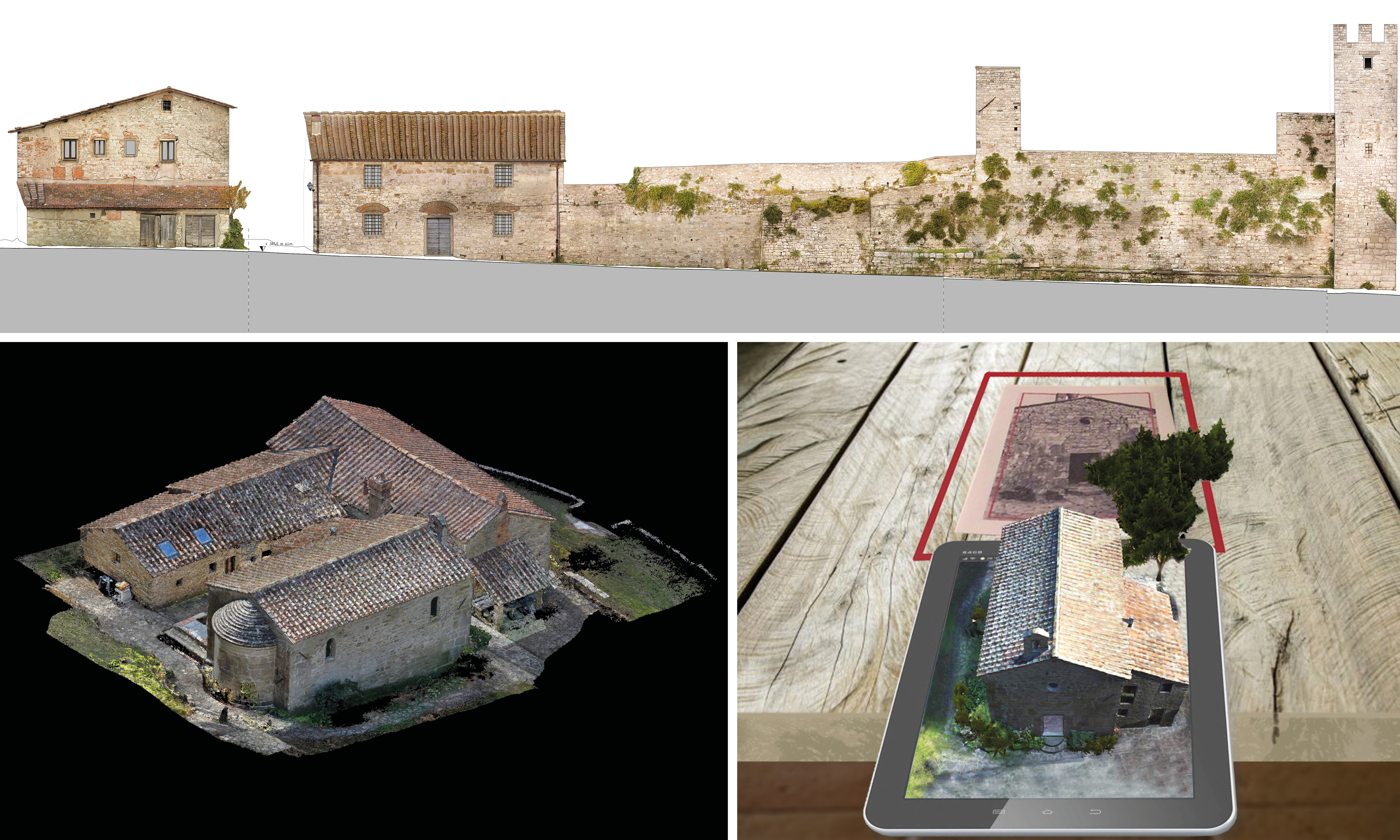
- Documentation of smaller historic centres with a view to safeguarding and enhancing the built heritage;
Management of settlements aimed at promoting responsible and sustainable tourism; - Development of searchable virtual models designed to disseminate information and support governance;
Information on opportunities for European, national and regional public funding; - Economic and financial analysis of investments included in the Municipal Public Works Plan to identify opportunities for public funding;
- Socio-economic analysis of the local area, to support the Structural Plan and the Town Planning Regulations;
- Economic, financial and town planning feasibility studies for specific projects;
- Plans for commercial and tourism development, promotion and the enhancement of cultural heritage;
Regional marketing plans to attract Italian and foreign investment; - Preparation of applications for public funding for investments.
Recent research projects
2024
Quadro conoscitivo del territorio rurale del comune di Reggello (FI)
Responsabile scientifico: Alessandro Merlo
2022|oggi
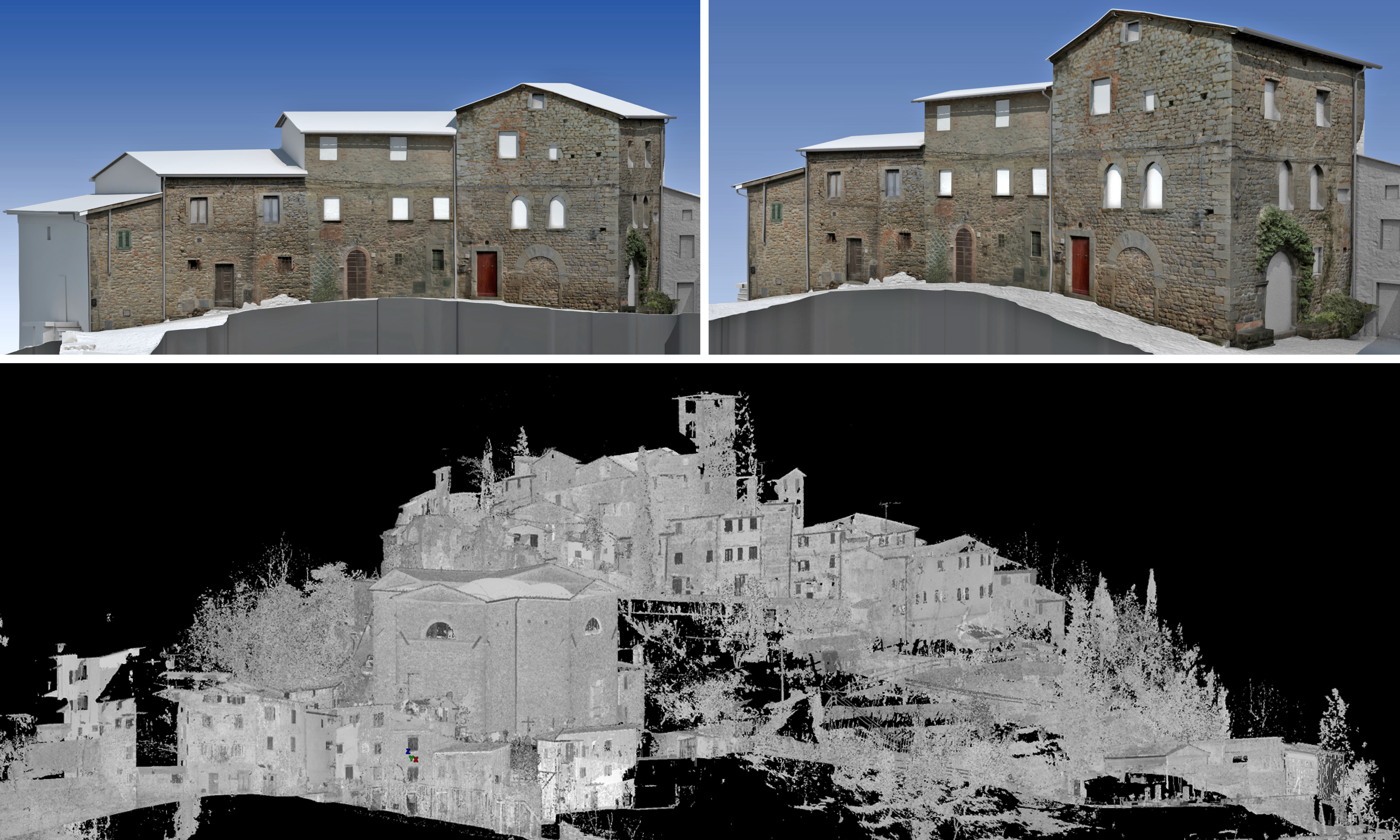
Documentazione morfometrica e cromatica dei castelli di Montevettolini e Monsummano Alto (PT)
Responsabile scientifico: Alessandro Merlo
2020|2021
Documentazione morfometrica e cromatica dei castelli della bassa Valdisieve (FI)
Responsabile scientifico: Alessandro Merlo
2017|oggi
Documentazione e valorizzazione del patrimonio culturale della Repubblica di Albania
Responsabile scientifico: Alessandro Merlo
2003|2014
Progetto Valleriana
Responsabile scientifico: Alessandro Merlo
Recent publications
Merlo A., Lavoratti G. (2022), Vernacular architecture and art. The representation of traditional buildings, in Mileto C., Vegas F., Cristini V., García-Soriano L. (eds.), Heritage 2022. International conference Vernacular Heritage: Culture, People and Sustainability, Universitat Politècnica de València.
Merlo A., Lavoratti G. (2019), Il patrimonio culturale dei centri storici minori. Le castella della Valleriana, in Fiore P., D’Adda E. (eds.), Small towns…from problem to resource. Sustainable strategies for the valorization of building, landscape and cultural heritage in inland areas, Roma: Franco Angeli.
Merlo A. (ed.) (2016), La piazza Ghiberti di Pelago. Storia e forma di uno spazio urbano, Firenze: didapress.
AA.VV. (2014), La Valleriana, in ‘L’Universo’, nn. 1-6.
Merlo A., Lavoratti G. (eds.) (2014), Strategie per la salvaguardia e valorizzazione degli insediamenti medievali, Firenze: DIDA.
Merlo A. (2012), Il castello di Pietrabuona, Pisa: ETS.
Merlo A. (2010), Il castello di Sorana, Pisa: ETS.
Merlo A., Lavoratti G. (eds.) (2009), Il progetto nel contesto storicizzato: esempi a confronto, Firenze: Alinea.
Last update
02.09.2026