
PROBIUR
Scientific Coordinator
David Fanfani
DIDA - Dipartimento di Architettura
The phenomenon of urbanisation has now taken on forms and dynamics that highlight issues which can no longer be addressed by traditional disciplines.
The imbalances generated pose clear problems not only in terms of ecosystems and environmental resilience, but also regarding the sustainability of the cultural and socio-economic model embodied by these settlement dynamics – a model centred on the financialisation of the economy, detached from the local area and its contextual values.
In this context, the challenge arises of studying and defining models, operational methods and design techniques that must be situated within a broader interpretative and guiding framework capable of redefining the principles and criteria of territorial quality and sustainable development, based on a co-evolutionary relationship between human society and the territory.
Against this backdrop, the Territorialist School at the University of Florence, founded by Alberto Magnaghi, has for over two decades been developing ideas and practical experience, expressed in particular through research of national interest funded by the MIUR, research activities within PhD programmes and on specific projects, agreements with public bodies and organisations, and experience in territorial and landscape planning.
Through continuous operational refinement of the bioregional approach, the research group has developed the concept of the Urban Bioregion, understood as a sphere of interaction between cities and agro-forestry systems, within which to identify relationships of mutual benefit and exchange between urban and rural domains in terms of the sustainable use of resources, and the regeneration of the environment, urban form and landscape.
This experimentation requires further development in order to achieve a methodological and operational systematisation of the bioregional model. This will also involve a comparative analysis of international case studies, particularly within the framework of European policies relating to the territory and the city.
In tale scenario la Scuola territorialista dell’università di Firenze, promossa da Alberto Magnaghi, ha ormai da oltre due decenni sviluppato riflessioni ed esperienze, espresse in particolare attraverso ricerche di interesse nazionale finanziate dal MIUR, attività di ricerca in sede di dottorato di ricerca e su progetti specifici, convenzioni con enti e soggetti pubblici, esperienze di pianificazione territoriale e paesaggistica.
The research methods of the Unit, taking into account the subject matter of the study, are based on a number of methodological principles, namely:
- Interdisciplinarity
- Multiscalarity and interscalarity
- Local and contextual approach: the heritage dimension
- Operational focus
- Communicative planning/inclusivity
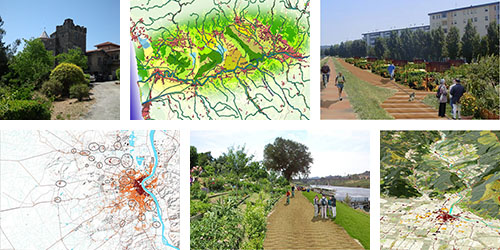
In terms of scientific objectives, the unit aims to:
- move beyond a sectoral approach to territorial and urban planning and design, identifying – from an interdisciplinary perspective – the key elements of territorial analysis and design developed within various national and international research contributions, and situating them within the overarching framework provided by the bioregional model;
- to explore the concept of the bioregion and bioregional planning in greater depth from a disciplinary and scientific perspective. This involves, in particular, identifying criteria, indicators, and analytical, interpretative and planning models with a view to their application within the framework of spatial planning and design tools.
In terms of operational objectives, the unit aims to:
- contribute to the application of criteria, guidelines and operational models for the drafting, implementation and evaluation of integrated policies, spatial governance tools, and local development plans and programmes;
- promote, within the context of spatial planning and design, the value and importance of a bioregional approach as an appropriate response and tool for guiding settlement patterns and local development processes in line with sustainable development objectives;
- to engage directly in specific project planning processes in order to support decisions aimed at serving the public interest and at protecting and enhancing public and communal assets, including through research and action initiatives.
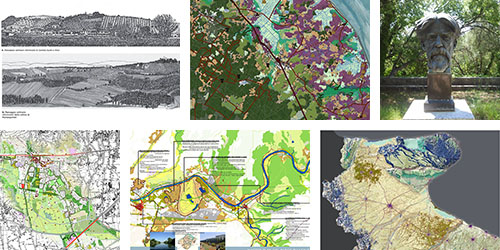
Recent research projects
Our completed and ongoing projects include collaborations with the PRIN and agreements with public bodies, as well as Life+ projects.
Public administrations and sectors of the public administration, agencies and functional units of the public administration and mixed-economy organisations, socio-economic trade associations, and third-sector organisations working on local issues are our key partners.
Within the key priorities defined by the ‘Horizon 2020’ Framework Programme for Research and Innovation, the ‘Societal Challenges’ priority identifies numerous areas that can be addressed through the Progetto Bioregione research unit. Among these, it is worth highlighting those relating to:
- health, demographic change and well-being;
- food security and sustainable agriculture;
- climate action and resource efficiency; agroforestry activities;
- inclusive, innovative and safe societies; maintaining opportunities and tools for active citizenship; retaining young people in the region as a means of ensuring the economic and social vitality of these areas.
Last update
03.09.2026