
SUP&R
Scientific Coordinator
Francesco Alberti
Head office
Palazzo San Clemente
via P.A. Micheli 2
FIRENZE
tel.: 055 2756449
Composition of the research unit
DIDA - Dipartimento di Architettura
Roberto Bologna, Giuseppe De Luca, Letizia Dipasquale, Pietro Giorgieri, Giulio Giovannoni, Anna Lambertini, Valeria Lingua, Fabio Lucchesi, Claudio Saragosa, Iacopo Zetti, Francesco Berni, Stefania Cupillari, Sabine Di Silvio, Michela Fiaschi, Eleonora Giannini, Ilaria Massini, Sara Naldoni, Lorenzo Nofroni, Alessandra Pacciani, Simone Scortecci
In university education and research on urban planning issues, there is now a need for a cultural approach in which critical and interpretative skills are combined with a broad spectrum of technical and design expertise, in order to analyse problems effectively and steer the transformation of physical space towards forms of sustainable development of the territory and settlements.
To answer this question, the SUP&R Research Unit was established by bringing together a range of skills and expertise: analysis of local resources; urban, environmental and landscape planning and design at various scales; and technological innovation for the benefit of the city and the local area.
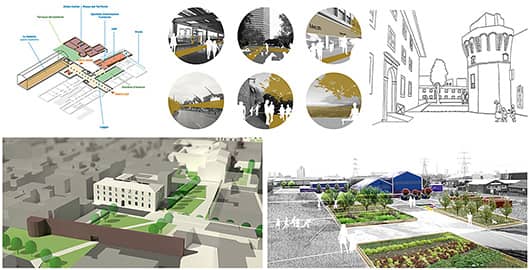
Thematic areas
Tactical Florence!
Tactical urbanism is an innovative approach to the transformation of public space, based on temporary, low-impact and low-cost interventions. Having emerged as an informal, grassroots practice, in recent years it has also inspired institutional urban policies, becoming a useful tool for revitalising neglected spaces and making them more liveable, inclusive and accessible. These initiatives, which often involve the direct participation of local residents, represent an alternative and flexible approach to urban development.
Within the SUP&R research unit (Francesco Alberti, Eleonora Giannini, Sara Naldoni, Simone Scortecci), the topic of tactical urbanism is the focus of a research-action project aimed at experimenting with design strategies for the regeneration of urban public spaces in Florence. The aim is to develop tools and methods to integrate collaborative and flexible approaches into urban planning in consultation with local neighbourhoods and the local authority.
SUP&R has spearheaded the creation of a cross-sectoral working platform that brings together individuals with diverse areas of expertise, active in the fields of research, active citizenship and sustainable mobility. This collaboration has given rise to Firenze Tattica, a research and experimentation network established in partnership with Legambiente Firenze and FIAB Firenze Ciclabile, with the aim of designing – or reimagining – Florence’s public space through a tactical approach.
For further information.
email: info[at]firenzetattica.it

Taking into account the various aspects – environmental, social and economic – of the concept of sustainability, the issues addressed by the UdR are:
- the rethinking of the morphological and functional structures of the contemporary city (including historic centres), made necessary by the crisis of the post-industrial model, and the consequent refinement and integration of the tools and methods used in urban and spatial analysis, planning and design.
- liveability and urban quality, the protection of historical, cultural, agri-environmental and landscape heritage, environmental and energy issues, and resilience to climate and social change: these are issues that call for new local balances between settlements and the surrounding area, capable of facilitating the transition towards more sustainable organisational models and lifestyles.
- the urban planning project’s focus on the community, understood as a dynamic whole comprising people and social relationships that are reflected in the various ways in which physical space is used, with particular attention also paid to temporary practices of modifying the built environment according to a ‘tactical’ and ‘bottom-up’ approach.
- the renewed international interest in the concept of ‘urban form’, in relation to issues of sustainability and the integration of urban challenges with the wider local area, and the growing role played by environmental networks in the regeneration of urban contexts (both in terms of the provision of ecosystem services and the reconfiguration of peripheral urban areas), the development and implementation of settlement models designed to reduce residents’ dependence on car use and fossil fuels; the creation of urban centres suited to different types of urban fabric (dense and sparse, continuous and discontinuous, etc.), the emergence of new forms of housing and types of multifunctional spaces, and the trialling of ‘eco-neighbourhoods’, to the urban regeneration strategies being implemented across Europe by both some large cities and numerous small and medium-sized towns.
- the integration of the concept of the ‘smart city’ into the urban planning and design process, linking technological innovations across various sectors (mobility, urban infrastructure, services, communications, utilities, etc.) to an overarching view of the problems and possible solutions, taking into account both the specific characteristics of local contexts and the replicability and adaptability of innovative measures in different contexts.
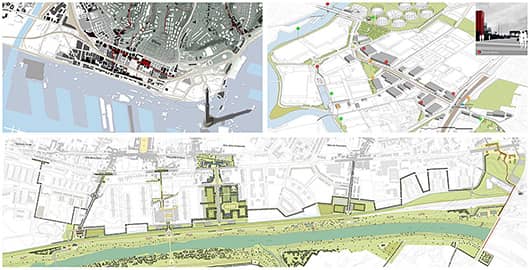
Training activities
- 2013–2016: Level II Master’s degree programme ‘The Smart City Project’, coordinated by P. Giorgieri.
- 2017–2018: Level II Master’s degree programme ‘The Smart Green City Project’, coordinated by P. Giorgieri.
Thematic seminars for the degree programmes at the School of Architecture
- 2023 – International workshop ‘Design in the Anthropocene. Sun, water and soil’ at the Department of Architecture (DIDA), in collaboration with the Pontificia Universidad Católica de Ecuador (PUCE), Quito (Ecuador)
- 2024 – International workshop “Urban Strategies Towards Sustainability” on the themes of integrated and sustainable design at the Department of Architecture (DIDA), and organisation of a study trip to the Pontificia Universidad Católica de Ecuador (PUCE) in Quito (Ecuador)
- 2015 – “The San Giuseppe Complex in Empoli: from hospital to multifunctional centre” (Master’s degree course in Urban and Regional Planning and Design, 4 CFU), coordinator F. Alberti.
- 2015 – “Rethinking the city: urban regeneration projects for the future of Lastra a Signa” (Master’s degree programme in Architecture, 6 CFU), coordinator F. Alberti.
- 2016–2017 – “Habitability in high-risk areas. Sustainable regeneration in urban areas – L’Argingrosso in Florence” (CCdLL Single-cycle Architecture programme and Master’s degree in Architecture, 6 CFU), coordinator: R. Bologna.
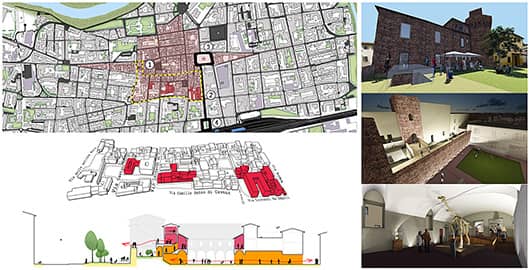
Key research and projects
- 2023 - “La rigenerazione urbana di distretti commerciali in crisi. Approcci metodologici e strumenti metaprogettuali sul caso studio di Via Montalbano a Quarrata (PT)” (committente: Comune di Quarrata). Responsabile scientifico: Francesco Alberti; assegnista: Eleonora Giannini
- 2022 - " Studi e proposte per il riordino e la riqualificazione integrata del margine urbano in prossimità del nuovo casello autostradale di Barberino di Mugello, in relazione agli obiettivi di definizione di un nuovo assetto dell’ingresso alla città dall’autostrada (“Porta urbana”), attraverso la razionalizzazione della viabilità e delle aree di sosta esistenti e l’individuazione di un sistema coordinato di interventi di qualificazione ambientale, paesaggistica e funzionale” (committente: Comune di Barberino di Mugello). Responsabile scientifico: prof. Francesco Alberti; assegnista: Lorenzo Nofroni
- L'unità di ricerca ha avviato il progetto Urban L.I.F.E. (Urban Liveability & Innovation For Everyone), ammesso ai servizi di pre-incubazione del 15° bando dell'Incubatore Universitario Fiorentino (IUF) per il periodo 2017-2018, con l'obiettivo di fornire progetti e strumenti integrati per la creazione e la gestione di centralità urbane in chiave di innovazione tecnologica, sostenibilità, sicurezza e inclusione sociale. Responsabile del progetto: Francesco Alberti.
- “Adaptive design e innovazioni tecnologiche per la rigenerazione resiliente dei distretti urbani in regime di cambiamento climatico” (ricerca finanziata dal MIUR – bando PRIN 2015). Responsabile U.O. Università degli studi di Firenze: Roberto Bologna. Membro U.O.: Francesco Alberti.
- “Mobilità sostenibile nelle aree interne: trasporto pubblico e servizi condivisi. Individuazione di una strategia operativa per l’ambito territoriale della Garfagnana in Toscana” (ricerca finanziata dalla Fondazione Banca Nazionale delle Comunicazioni – bando “Progetti di ricerca scientifica nei settori del trasporto passeggeri, trasporto merci e logistica e mobilità sostenibile 2016”). Responsabile scientifico: Francesco Alberti.
- “Ad Arnum. Strategia per la realizzazione di una ciclovia e l’implementazione di un servizio di bike sharing a pedalata assistita lungo il corso dell’Arno” (committenti: Comuni di Pontassieve, Fiesole, Bagno a Ripoli, Rignano sull’Arno). Responsabile scientifico: Francesco Alberti.
With DIDALab: ‘Plans and projects for the city and the local area’
- “Il patrimonio edilizio storico di Empoli: classificazione degli edifici e progetti di rigenerazione integrata nell’ambito della revisione degli strumenti urbanistici vigenti e del programma di innovazione urbana” (committente: Comune di Empoli). Responsabile scientifico: Francesco Alberti.
- “Il progetto architettonico e tecnologie avanzate per la rigenerazione urbana integrata: illuminazione intelligente ed efficientamento degli edifici nell’ambito del programma di innovazione urbana di Empoli” (committente: Comune di Empoli). Responsabile scientifico: Francesco Alberti.
- “L’intervento di restauro nell’ambito del programma di innovazione urbana. La Torre dei Righi e le strutture difensive di Empoli come caso di applicazione progettuale” (committente: Comune di Empoli). Responsabile scientifico: Francesco Alberti.
- “Il nuovo Piano Operativo del Comune di Cerreto Guidi: studi per la revisione del piano e per la rielaborazione delle aree e della disciplina delle trasformazioni” (committente: Comune di Cerreto Guidi). Responsabile scientifico: Francesco Alberti.
With DIDALab ‘Regional Design’
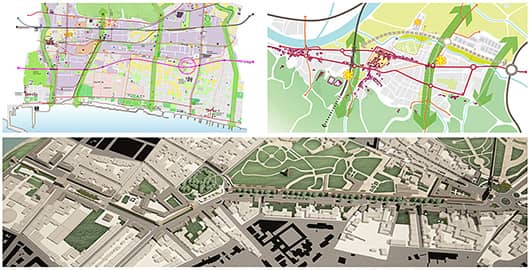
- “Studies for Territorial Scenarios and Visions for the metropolitan infrastructural system” (ricerca finanziata dalla Città Metropolitana di Firenze - progetto “Una vision per Firenze Città Metropolitana”). Responsabile scientifico: Valeria Lingua. Supervisore: Francesco Alberti.
Recent publications
- Alberti F. Giannini E. Naldoni S. Nofroni L. (2023) “From margin to urban interface: designing a network of open spaces as a new public park around the heritage city walls of Siena"
- Alberti F. Giannini E. Naldoni S. Nofroni L. (2023), “ConVerSi | Connessioni Verdi Siena. Il masterplan per il Parco delle Mura di Siena”
- ALBERTI F., DI SILVIO S., MASSINI I., NALDONI S., SCORTECCI S. (2022), Sustainable Regenerative Strategies for the Inner Areas: An Example of “Civic Design” in Marradi (Tuscany), in Alberti F., Amer M., Maghoub Y., Gallo P., Galderisi A., Strauss E. (eds.) (2022), Urban and Transit Planning. Towards Liveable Communities: Urban places and Design Spaces, Springer-Nature, Cham (CH), pp. 321-330 (ISBN: 978-3-030-97045-1)
- ALBERTI F., NOFRONI L. 2022, From car-oriented development toward a bicycle friendly environment. A case study in the Mugello Valley in Tuscany. Urban Planning & Architectural Design for Sustainable Development (UPADSD). Advances in Science, Technology & Innovation - IEREK Interdisciplinary Series for Sustainable Development, 2022
- ALBERTI F., BRUNI I., GIANNINI E., NALDONI S. 2022, Valorizzazione di paesaggi eccellenti. L'esperienza del Comune di Siena. Urbanistica Informazioni (INU)
- Alberti F., Berni F., Scortecci S. (2017), Epicentri di rigenerazione nei contesti regionali: il Progetto di Innovazione Urbana di Empoli, in Cambiamenti. Responsabiltà e strumenti per l’urbanistica al servizio del paese, atti della XIX Conferenza Nazionale SIU (Catania, 16-18/06/2016), Planum publisher, Roma–Milano, pp. 1339-1346.
- Alberti F., Bologna R. (2017), Fruibilità e resilienza delle aree urbane di margine. Permanenza e temporaneità negli interventi di rigenerazione, in Cambiamenti. Responsabiltà e strumenti per l’urbanistica al servizio del paese, atti della XIX Conferenza Nazionale SIU (Catania, 16-18/06/2016), Planum publisher, Roma–Milano, pp. 845-850.
- Alberti F., Scamporrino M., Rizzo A. (2017), Promuovere l’azione tattica. La temporaneità nella pratica urbanistica, in Talia M. (a cura di), Un nuovo ciclo della pianificazione urbanistica tra tattica e strategia, atti del convegno Urbanpromo – XIII Edizione (Milano, 8-11/11/2016), Planum publisher, Roma–Milano, pp. 281-286.
- De Luca G. , Moccia F. D. (2017). Pianificare le città metropolitane in Italia. Interpretazioni, approcci, prospettive. INU Edizioni, Roma.
- Gallo P., Bologna R. (2017). “Riqualificazione urbana tra resilienza e sostenibilità”, in «Eco Web Town», vol. Vol. I-II, pp. 1-15.
- Lambertini A. (2017). Il dono come paradigma del progetto per i paesaggi ordinary, in: Boschiero P., Latini L., Zanon S., Curare la terra. Luoghi, pratiche, esperienze. Caring for the land. Places, practices, experiences, Fondazione Benetton Studi Ricerche, Treviso, pp. 97-114.
- Giovannoni G. (2016). The Social Life of Gas Stations, in «The Journal Of Public Space», vol. 1, pp. 75-94.
- Lingua V. (2016). "Il “Regional Design” come metodologia di pianificazione spaziale dei grandi assetti infrastrutturali". In: Sandro Fabbro e Piero Pedrocco. Ordinamenti spaziali e infrastrutture. Ripensare le reti per riqualificare il Paese, Aracne, Roma, pp. 131-146.
- Saragosa C. (2016). Il sentiero di biopoli. L'empatia nella generazione della città, Donzelli, Roma.
- Lucchesi F. (2016). L’evoluzione della rappresentazione georeferenziata dei caratteri territoriali. In: Marson, A. La struttura del paesaggio, Laterza, Roma-Bari, pp. 101-112.
- Alberti F. (2015), Civic design for resilient cities, in Italia '45-'45. Radici, Condizioni, Prospettive, atti della XVIII Conferenza Nazionale SIU (Venezia, IUAV, 11-13/06/2015), Planum publisher, Roma–Milano, pp. 565-572.
- Alberti F., Brugellis P., Parolotto F., a cura di (2014), Città pensanti. Creatività, mobilità, qualità urbana, Quodlibet, Macerata.
- Correia M., Dipasquale L., Mecca S. (a cura di) 2014, VerSus: heritage for the future. Vernacular knowledge for sustainable architecture. FUP, Firenze.
Last update
08.09.2026